

When you think of Africa, what do you see? Rough roads? Poverty? Headlines about hardship? Africa has these things and so much more. Beautiful children. Passionate people. Growth and change.
For two weeks, eight of us, ages 17 to 71, experienced a pilgrimage through northern Uganda. We engaged with many beautiful Ugandans, including hotel staff, students, and staff from BOBI Agribusiness Institute—a university patterned after College of the Ozarks—and villagers supported by Kibo, an organization connecting with communities spiritually, and working alongside them on clean water, sanitation, safer living practices, and food security.
Many in our group had never been to Africa. For me, it had been 15 years since my last trip to East Africa as an NGO employee. These places aren’t always easy to reach, but they reveal the heart and soul of a country: the everyday people living authentic lives. I was eager to see how life in Africa had changed over the years. And change is happening.
On earlier trips, I saw hundreds of people walking dangerous highways because they had no transportation. Now, most travel by boda boda (motorcycle), bicycle, or taxi bus. Years ago, women gathered water from muddy, contaminated sources. Today, thanks to organizations like Kibo, many villages have wells that provide safer water and healthier communities while giving mothers more time to care for their children, grow food, and sell their produce. Education opportunities are also expanding thanks to schools like BOBI.
Yet one thing has not changed. And I hope it never does.
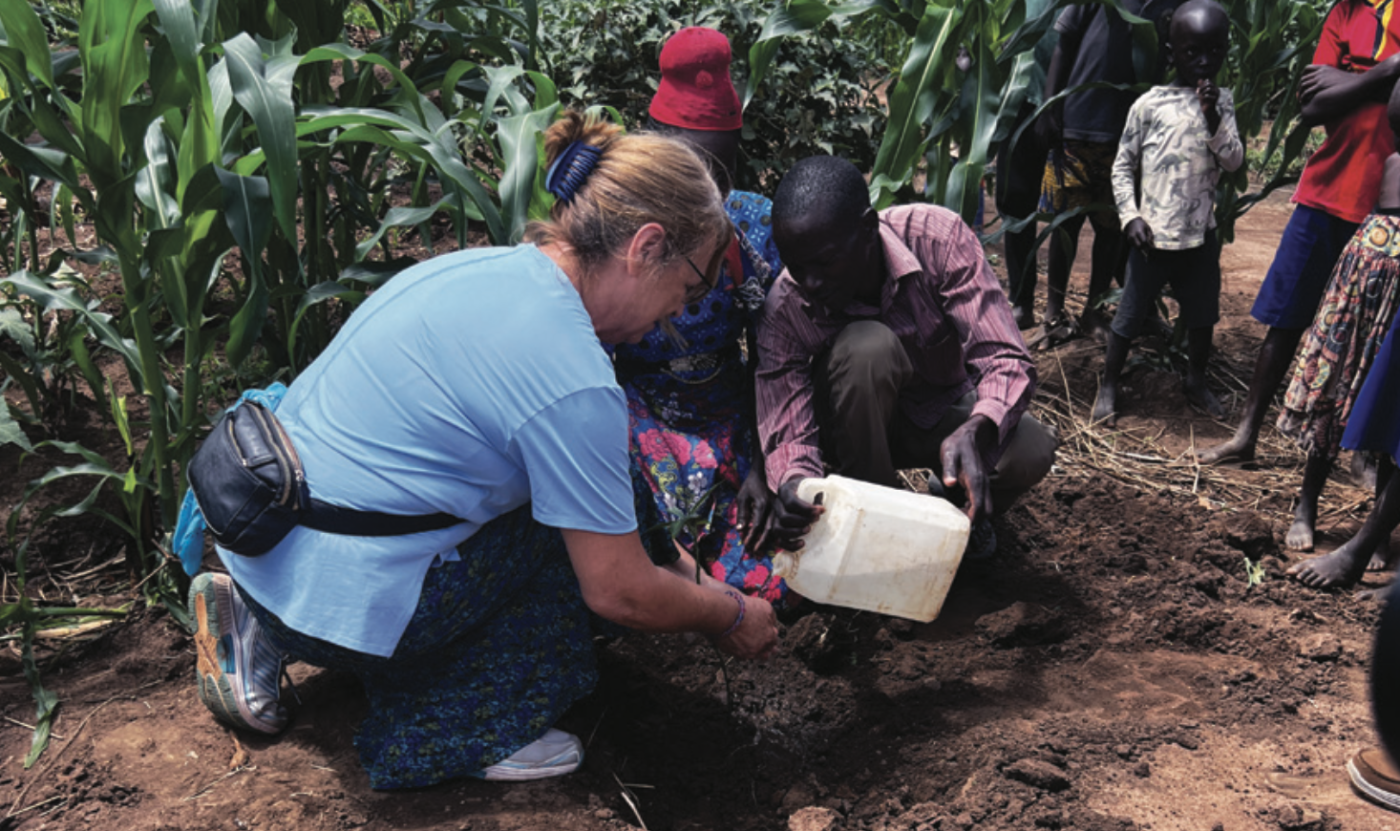
The most meaningful part of any journey is the conversations along the way: the listening, learning, encouragement, and shared stories. We heard students recount trauma and tragedy before coming to BOBI for a promising future. With villagers, we planted trees that will bear fruit for decades, stomped mud to build clay ovens, and listened to stories of God’s presence in their lives.
We built long-lasting friendships, bridging people and cultures. These will outlive material things because they connect hearts. And those bridges of compassion can last for eternity.